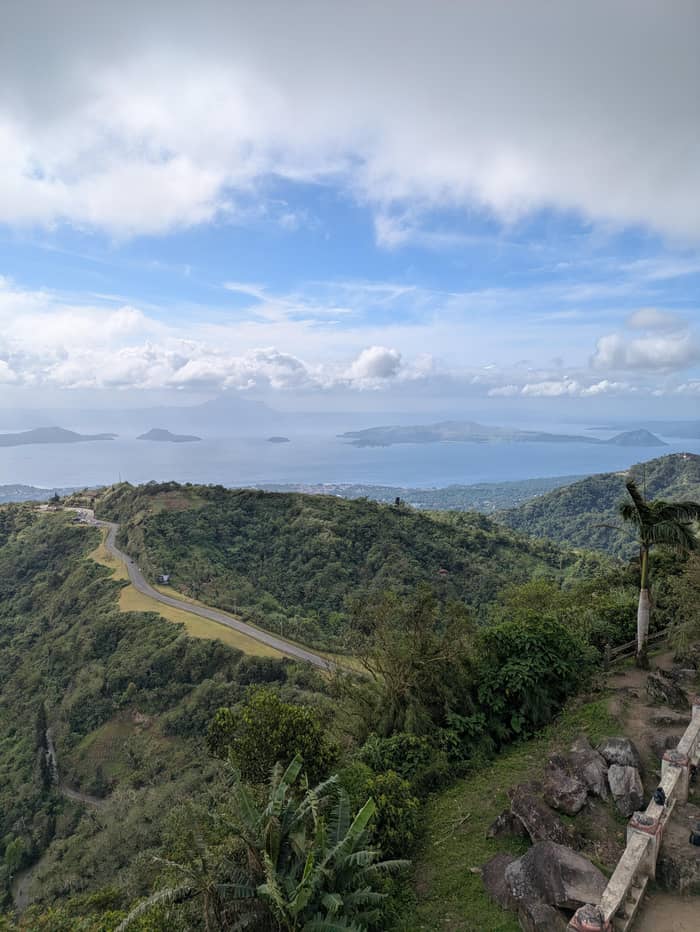
Short day
The half day sold here
Hotel pickup and a return
- Length5 hours
- Reviews288 at 4.44
- From$67
Guides
Language
Currency
Look up datesstarting at $68 · free cancellationTick-off checklist
Quick summary
Whether Tagaytay is safe for visitors depends on the volcano alert level, the weather and the road, since no official source rates the town as a whole.
Safety essentials
Things to do · 9 items
Check off each item as you go. Your progress stays saved on this device.
0 / 9 ready
You are ready. Only your date and your pickup hotel in Manila are left to choose.
Hold a seatTagaytay is a popular day trip, but it sits near an active volcano on busy roads. Here is what official sources say, and how to check the status yourself on the day.
Editorial team, tagaytaytour.click · Updated November 24, 2026 · Allow 8 min
The essentials
No official source rates Tagaytay as safe or unsafe in a single sentence, and a page that does is guessing. What exists is a set of country-level government travel advice pages and a few local documents, and together they cover the real risks of a day trip: the volcano, the roads, the weather and petty crime. This page gathers them, attributes each one to its source and says what you can check yourself.
The short version is balanced. The city's own profile says the city sits within the 14-kilometer danger zone radius around Taal and that PHIVOLCS does not consider it a high-risk area because of its elevation.4 The same documents describe hazards that apply to any day trip in the country, such as heavy traffic, typhoons and street crime, none of which is specific to the ridge.5,6,8
A sensible visitor handles Tagaytay like any popular outing: read the volcano bulletin, keep the route simple, watch the sky and keep valuables out of view. A tour that collects you from the hotel and returns you there removes the road and transfer choices, yet it leaves the weather and the volcano exactly where they were. The sections below take each risk in turn and say what to do about it.
Risks and sources
| Risk | What the source says | What to do |
|---|---|---|
| Taal volcano | Entry onto the island is prohibited3 | Check PHIVOLCS before you go11 |
| Ash and haze | Inhaling volcanic ash can be harmful4 | Postpone if an advisory is in force4 |
| Road traffic | Accidents happen frequently5 | Travel by day with a driver5 |
| Typhoons and rain | Mostly June to November6 | Use the free cancellation window |
| Street crime | Pickpocketing and bag snatching are common7 | Keep valuables out of sight7 |
| Scams on transport | Agree a tricycle fare in advance16 | Use accredited rideshares17 |
Quoted from official government pages for the Philippines as a whole; none of them rates Tagaytay on its own.5
Taal is monitored by PHIVOLCS, the national volcano and seismology agency, which rates it from alert level 0 to alert level 5, per its alert page this November.1,2 The agency says levels 1 to 5 correspond to increasing severity of unrest.11 At level 0, which it calls normal, no major eruption is foreseen but steam-driven and gas eruptions can occur without warning, and permanent habitation on the island must not be allowed.1
Level 1, low-level unrest, closes the Main Crater, the Daang Kastila fissure area and the Mt. Tabaro eruption site.12 Level 2 closes the whole island and tells the highest-hazard communities to prepare for evacuation.13 Level 3 orders the island, the lake and the Batangas lakeshore communities facing the vent to be evacuated.14 Levels 4 and 5 widen the evacuation zones, and level 5 brings warnings of base surges, a volcanic tsunami and heavy ashfall.15,2
For a visitor, the UK government gives the simplest rule: entry into Taal Volcano Island and Taal's Permanent Danger Zone is prohibited, and PHIVOLCS is the source for updates.3 A ridge tour looks at the volcano from a distance and does not enter the island. Check the level on the PHIVOLCS site the morning you travel, not only on the morning you book, because a level can change, and treat any explosion warning as a reason to postpone.
The day of travel
The evening before
PHIVOLCS rates Taal from level 0 to level 5, and entry rules tighten at each step.1,2
At breakfast
Typhoons mostly occur between June and November, and heavy rain may cause flooding and landslides.6,9
Before pickup
A ridge tour mails its pickup time, with Bay Area hotels collected from 8:00 AM.
On the highway
Random checkpoints are routine, so allow extra time and cooperate.10
At the viewpoint
Bag snatching and pickpocketing are widespread in the country, as in Manila.7
On the return
The UK advice says avoid driving at night where possible.5
The city's ecological profile says Tagaytay is within the 14-kilometer radius identified as a danger zone after Taal's explosion of steam, smoke and ash, and that PHIVOLCS does not consider it a high-risk area because of its elevation.4 It adds that inhaling volcanic ash can be very detrimental to human health.4 Those statements together are the honest picture: a hillside town with a real but moderated exposure.
The UK government adds a general warning that any volcano in the Philippines can erupt without warning and that sudden steam and ash explosions may happen at any time.18 It also advises monitoring local advice before traveling to any area around volcanoes. If ash is falling, the sensible response is to stay indoors or in a closed vehicle, to protect your breathing and to follow instructions from local authorities.
On a clear day none of this shows. The risk is rare but heavy, which is why the alert scale exists and why a refund window matters. The listings compared on this site return the full fare when you cancel at least a day beforehand, so a date can be dropped at no cost if the bulletin changes, and nobody has to gamble on a forecast just to hold a place.
Pick by worry
Say what concerns you and see what to check or choose first.
If I worry about the volcano
Check the PHIVOLCS level
Entry onto the island is prohibited, and the scale runs from level 0 to level 5.3,1,2
If I worry about the drive
Take a hotel-pickup tour
The half day collects from 21 hotel options and returns to them.
If I worry about the weather
Book with free cancellation
The listings refund in full for cancellations at least 24 hours ahead.
If I worry about theft
Keep valuables out of sight
Crowded places call for hands on your bag.7
If I worry about getting around
Agree fares before riding
Settle a tricycle fare before you set off to dodge scams.16
Flexible bookings
Short day
Hotel pickup and a return
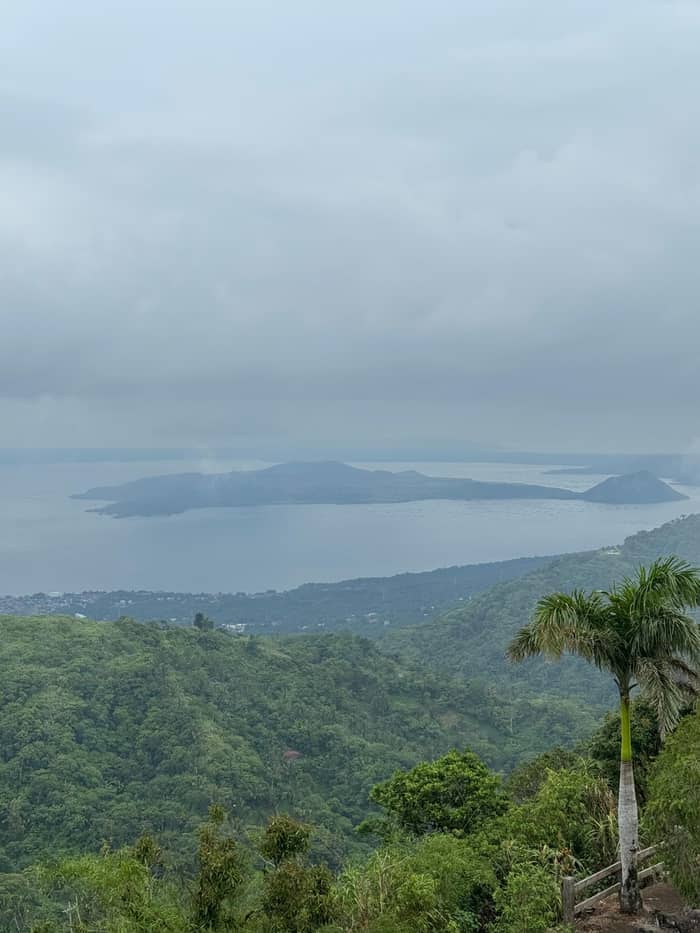
Small group
Small group of up to 15
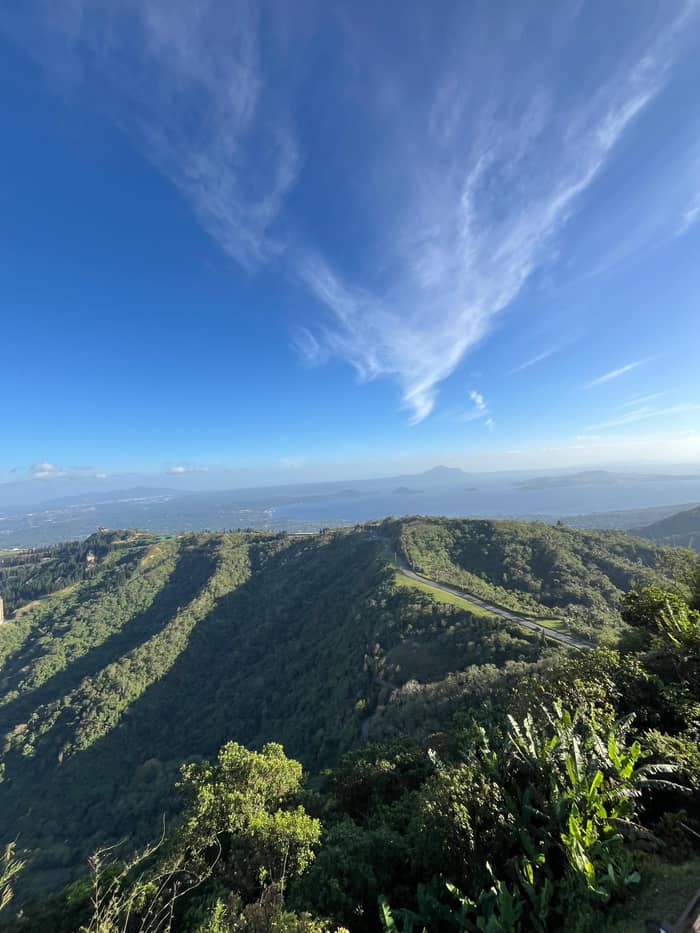
Private
Your pace, your stops
The road to Tagaytay deserves attention because so much of the day is spent on it. The UK government links frequent accidents on Philippine roads to poor surfaces, dangerous driving and weak enforcement, and urges drivers to avoid night trips and dangerous weather where they can.5 The Canadian government describes traffic as very heavy, especially in Metro Manila.19
With a hired car or driver, ask for a daytime plan and a return before dark. On a bus, rely on the terminal's live schedule and confirm the route with the conductor.20 The UK advice adds that private cars, taxis and shared transport can meet random checkpoints on the road, where the right response is to cooperate and leave extra time.10 A checkpoint is routine, and a calm, polite stop is all it needs.
For short hops inside the city, Canadian advice is to fix the fare with a tricycle driver before departing, which prevents scams.16 Australian advice prefers accredited rideshare providers or hotel hire cars, particularly at airports.17 Either tip lowers the chance of a bad surprise, neither costs anything, and both are easy to remember when you stand at a busy corner with a heavy bag.
Weather is the risk most likely to change your plan. The UK government says around 20 typhoons hit the Philippines each year and most happen between June and November.6 The Canadian government gives the rainy or monsoon season as May to November, with storms possible all year,21 and the Australian government says typhoons usually occur between late May and December and that heavy rain may cause localised flooding and landslides.9
The city's profile describes the local pattern: dry from November to April, wet for the remainder, with yearly rainfall of 2,546 mm that peaks at 459 mm in August.22,23 After heavy rain flooding and mudslides are frequent, Metro Manila included, and roads may become impassable.24 When a typhoon warning appears, postpone, and lean on the refund window of your booking.
Fog is a smaller nuisance, mostly a matter of visibility. One combination listing grants that the crater view from the ridge depends on fog, and the city's profile calls Tagaytay misty, with cooler spells from December through February.22 A foggy morning on a hillside road calls for slower driving, which a tour driver handles for you.
Video
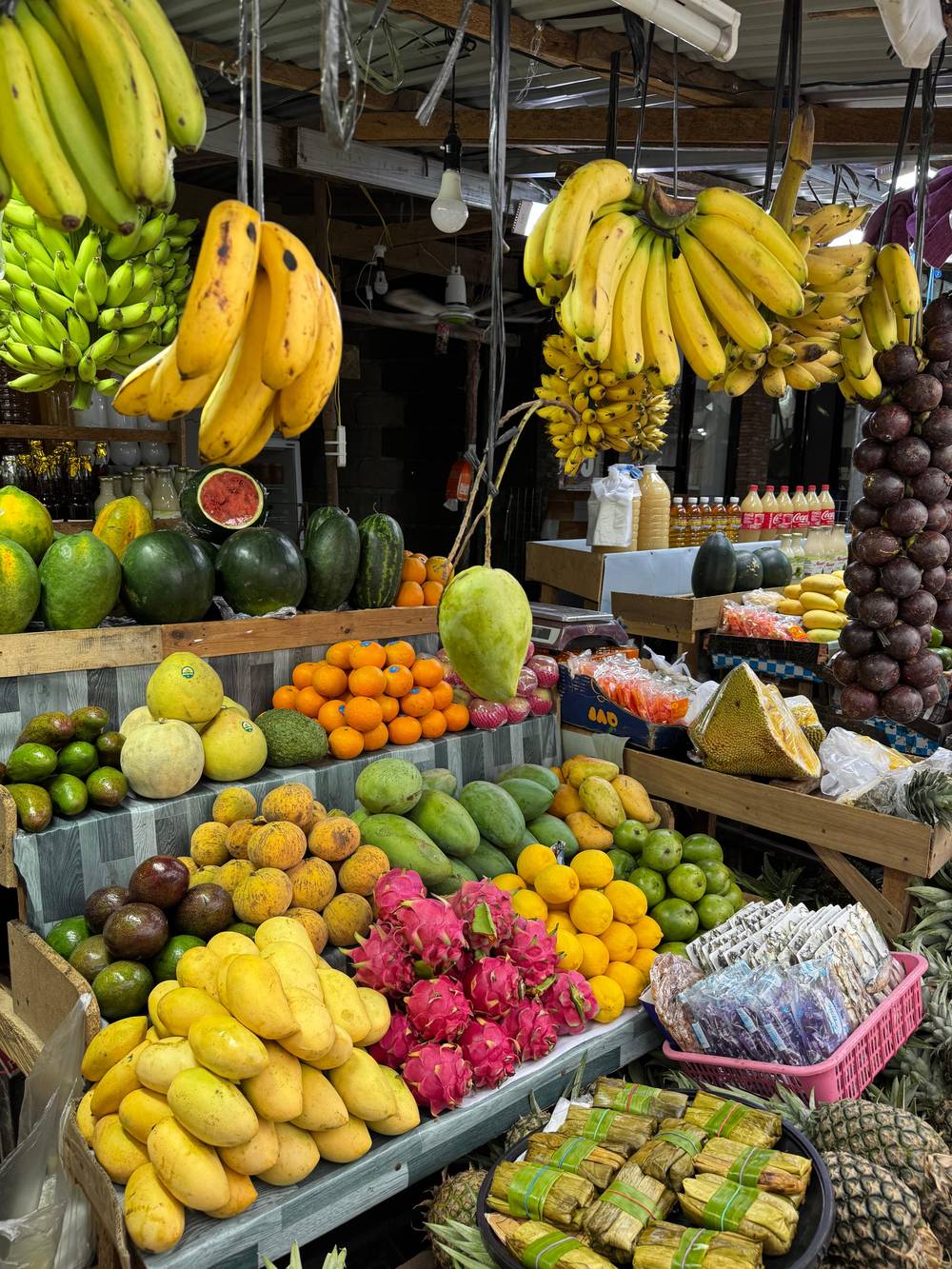
Lost Slow Traveler on YouTube · The video waits until you tap play to load.
Entry into Taal Volcano Island and Taal's Permanent Danger Zone is prohibited.
British advice reports high levels of street crime and robbery in the Philippines, at times involving weapons and firearms.8 Australian advice names pickpocketing and bag snatching as common, in Manila too, and asks for care in crowded malls and other public places.7 These warnings are country-wide and do not single out Tagaytay
Plain habits cover most of it: phone and wallet out of sight on the walk to the terminal, no more valuables than you need, cash and cards split between pockets, and the bag in front of you in a market. A fruit market is lively and busy, and those habits belong there as much as in the capital, whether you shop alone or follow a guide.
Scams cluster around transport. The advice above on tricycle fares and accredited rideshares is the practical answer, together with a clear price before any ride and a booking through a listing that shows its cancellation terms.16,17 If something does go wrong, report it to local police before you leave the country, and keep copies of your booking records and your passport.
The city government's tourism page presents Tagaytay as a destination open to visitors, with parks, museums, restaurants and hotels, and it carries a warning on transport that routes, stops and schedules may change.25 A park gate, a museum or a viewpoint can still close for weather, maintenance or a local event, and a page like this one cannot know the answer on your day.
Check these on the day. Start with the PHIVOLCS bulletin for the Taal level. Then read the weather forecast and any typhoon bulletin. If you are going by bus, open the terminal's live bus schedule.20 Finish with your operator, for the status of a tour that depends on the weather: the 10-hour boat listing says it may reschedule or cancel in bad weather. These checks take minutes and settle most of the question.
The question many travelers type, is Tagaytay open for tourists now, is best answered by those live sources, and not by any static page. If every one says go, the ridge is the same place it has been for decades. If one says no, listen to it. A free cancellation window turns that decision into a calm one instead of an expensive one.
A hotel-pickup tour changes the road part of the risk. This site's half day starts at 21 hotel options in Manila, comes with a live English-speaking guide and ends back at those hotels, in 5 hours from $67. You do not navigate, park or change vehicles, and a local driver handles the highway. That is a real change, and the main reason a guided day is worth considering.
A tour does not change the volcano or the weather. It does give you a booking with a clear refund window, a full refund until 24 hours before the start on these listings, and an operator able to reschedule when the weather turns. Read the notes of a boat day closely, because its stops may swap order with the weather.
For more control, the private highlands day lets you set the stops and the pace: a group of your own, 7 hours, from $98. Say at the outset that you want to be off the road after dark and will skip a stop if the weather turns. A flexible plan is the most reliable safety measure on a ridge day, and asking for it costs nothing.
FAQ
The UK government says entry into Taal Volcano Island and Taal's Permanent Danger Zone is prohibited.3
Cancel a day or more ahead and the listings compared here return your payment in full.
Sources
Planning a Tagaytay tour from Manila? Ask a real person here.